
We often talk about “thinking outside the box.” This phrase is used to denote the ability to find original ideas and solutions, symbolizing the epitome of creativity. Yet, for truly meaningful innovation to occur, one must first understand what ‘the box’ entails. In essence, a thorough comprehension of the basics is imperative.
Inside the World of the Box
Every creative thought process is built upon a foundation of specific knowledge. For instance, to become a musician, one must understand the basic theories of music and how instruments work. Similarly, to create effective strategies, it’s crucial to have a solid understanding of and experience with various strategic frameworks. ‘The box’ refers to this foundational knowledge and rules. Here are a few examples:
| Framework (Box) | Description |
|---|---|
| SWOT Analysis | Helps organizations identify their Strengths, Weaknesses, Opportunities, and Threats, providing insights into both internal and external factors affecting the business. |
| Porter’s Five Forces | Analyzes an industry’s competitiveness and potential profitability by examining five forces: competitive rivalry, bargaining power of suppliers, bargaining power of buyers, threat of new entrants, and threat of substitute products or services. |
| BCG Matrix | Categorizes business units or products into four quadrants based on their market share and market growth rate, helping companies decide where to allocate resources for maximum return on investment. |
| PESTEL Analysis | Considers the Political, Economic, Social, Technological, Environmental, and Legal factors that could impact a business, used to scan the external macro-environmental factors affecting the organization. |
| Ansoff Matrix | Helps businesses decide their product and market growth strategy by evaluating four different strategies: market penetration, market development, product development, and diversification. |
| Value Chain Analysis | Breaks down a company’s activities to identify value-added and cost-saving opportunities, examining primary and support activities. |
| McKinsey 7S Framework | A model that examines a company’s organizational design by looking at 7 key elements: strategy, structure, systems, shared values, skills, style, and staff, to ensure alignment for success. |
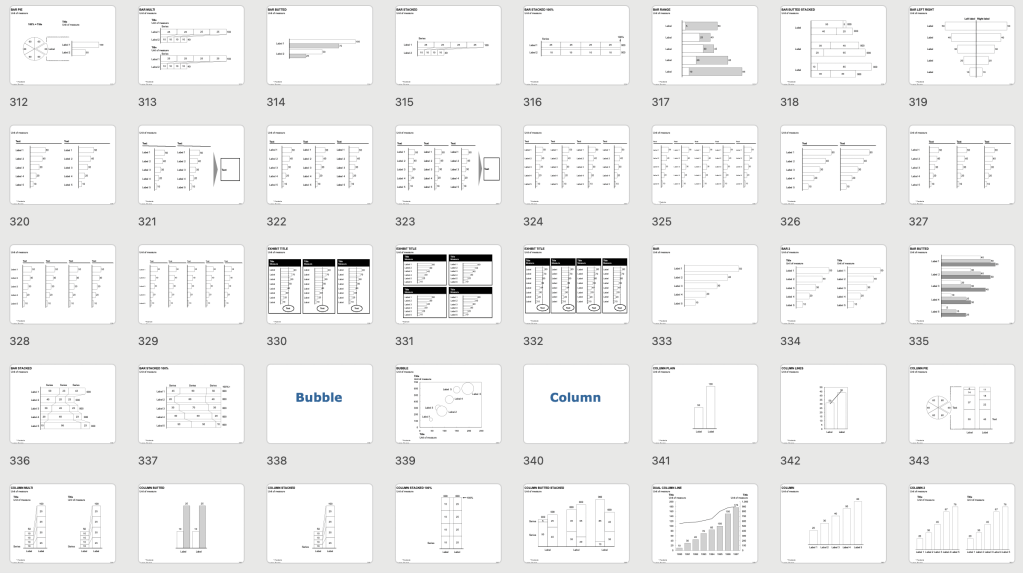
Here are examples of 500+ charts that McKinsey has prepared as samples for presentations, reflecting these strategic frameworks. Though they are quite old and can be considered classics, they are very useful if you want to understand the basics well.
Leave your email address, and I’ll send you the full PowerPoint file and free newsletters.
Your email has been sent!
Why Mastering the Basics Matters
Mastering the basics can feel tedious and frustrating. However, this process equips us with the essential tools for creative thinking. The more robust our basic knowledge, the broader the range of ideas we can explore and the more connections we can make.
How can one emerge from a box without knowing its exact shape and functions, and how can one create distinctions from that box?

Misconceptions About Creativity
Many believe creativity is akin to a form of genius, accessible only to the special few. However, in reality, creativity develops through continuous learning, experimentation, and learning from failures. Creative ideas do not spring from sudden, mysterious inspiration but stem from a deep understanding of basic knowledge and principles.

Venturing Beyond the Box
So, how can we move beyond the box? First, identify what ‘the box’ means in your field. Next, based on this established knowledge, explore new and original ideas. Sometimes, borrowing knowledge from other areas to introduce new perspectives can also be a method.

True creativity starts with the basics. Understanding the fundamental knowledge and principles thoroughly is the first step toward genuine innovation. I hope this article helps you grasp ‘the box’ and explore the boundless possibilities lying outside it. Master the basics in your field and forge new paths with creative thinking.BBM
Here are examples of 500+ charts that McKinsey has prepared as samples for presentations, reflecting some strategic frameworks. Though they are quite old and can be considered classics, they are very useful if you want to understand the basics well.
Leave your email address, and I’ll send you the full PowerPoint file and free newsletters.


 DesireMoneyLab.com
댓글 남기기